
HereWeGo
May 19, 2026 • 3 min read
Discover the volcanic heritage at Mount Usu, Japan. The lessons and legacies from this geological disaster leave an unforgettable mark on visitors.
Introduction to Mount Usu
On a chilly winter day in Hokkaido, Japan's northernmost island, a small group of us ventured along a narrow, snow-covered path at the base of Mount Usu. With each step in our snow boots, the surrounding scenery felt both rugged and humble. Beneath that blanket of snow lies one of Japan's most active volcanoes, quietly awaiting its next eruption. Mount Usu has a history of eruptions approximately every 20 to 50 years, with the most recent in 2000 creating over 65 large craters.
The Role of Our Volcano Meister Guide
Our guide for the day was Rie Egawa, the founder of the nature guiding service Sotoasobu and a certified Volcano Meister. Volcano Meisters are local guides trained to help visitors understand the geology, eruption history, and significance of living alongside a volcano. Egawa is not only an educator but also a storyteller, providing insights into the disaster of 2000 and its impact on the local community.
Lessons from the Disaster
In 2000, when Mount Usu erupted, mudflows devastated the area of Toyako Onsen, a hot springs town by Lake Toya. Fortunately, no lives were lost during this calamity, thanks to timely evacuations based on early warning signs detected by scientists. While destructive, the event left valuable lessons for the residents, and preserving the memory of this disaster has been done thoughtfully.
Preserving Historical Memory
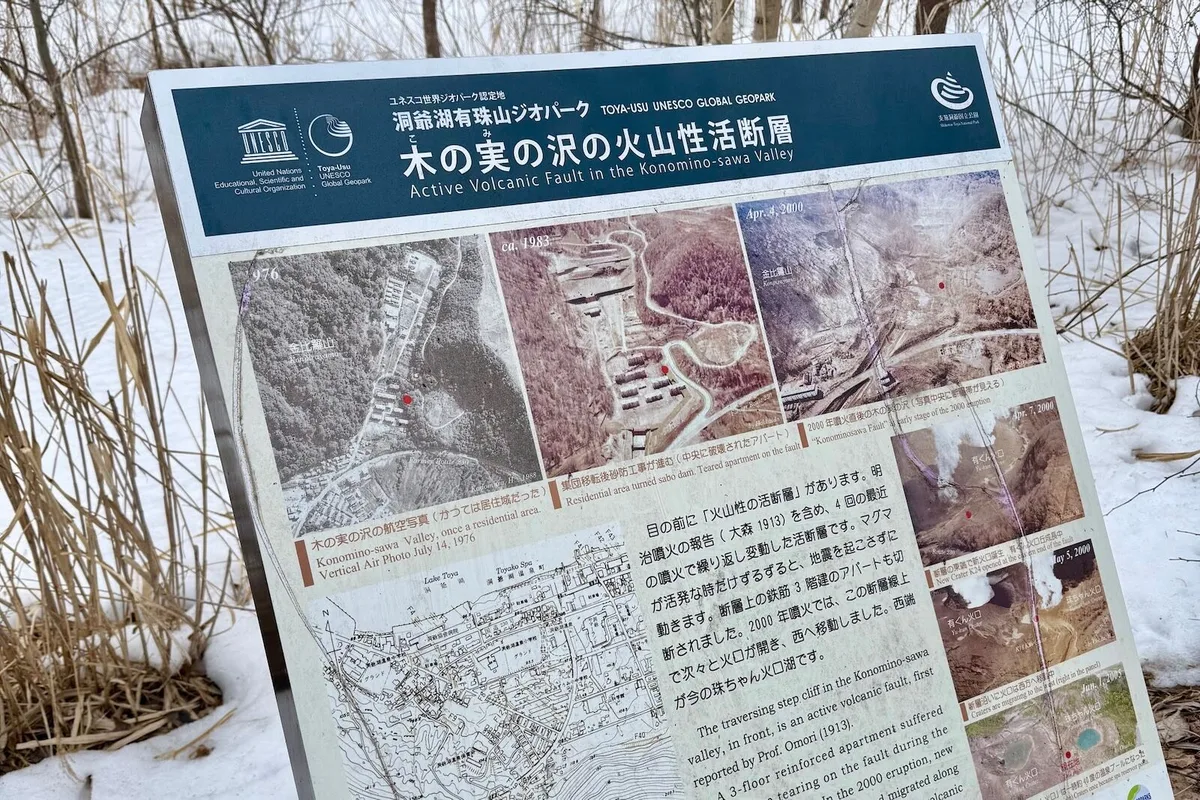
After the disaster, local authorities decided not to completely restore all the damaged structures. Collapsed bridges, distorted roads, and buildings buried under mud were left intact as a way for nature to reclaim the landscape gradually. This area has been developed as part of the Toya-Usu Geopark, where visitors can explore and learn more about the disaster.
✈️ Tìm chuyến bay giá tốt
Đặt vé ngay với giá ưu đãi từ các hãng hàng không
A Journey Through the Memorial Site
Visitors can walk along the 1.4-mile Konpira-yama Foot Route, once swept by raging mudflows. Along the way, remnants of the eruption are visible everywhere: a public bath partially buried beneath dry mud, or buildings leaning precariously after the ground shifted. Protective measures, such as sabo dams, have also been installed to mitigate the impact of future mudflows.
Volcano Activity Alerts
It’s important to note that Mount Usu remains active and is closely monitored. The craters formed during the 2000 eruption, like Yu-kun crater, can be accessed in the summer but only under the guidance of Volcano Meisters during the winter months. These experiences serve not only as lessons from the past but also as warnings for the future.
The Reality of Mount Usu
Visiting Mount Usu is not just an experience; it’s a journey to feel the pain and resilience of a community. The buildings that still stand after the volcano's wrath are testaments to the power of nature and human resilience. Rie Egawa hopes that every visitor leaves with this understanding and awareness of their own community, preparing them to face future disasters.
Above all, Mount Usu is more than just a volcano; it is an integral part of local life and culture, providing not only hot springs but also invaluable lessons about survival.
Article adapted and edited from: Matador Network
HereWeGo
HereWeGo is a leading online flight booking platform in Vietnam, providing accurate and up-to-date travel information. We are committed to delivering wonderful travel experiences with the best prices on the market.