
HereWeGo
April 12, 2026 • 4 min read
American Airlines and Google have discovered a way to reduce aircraft contrails by up to 62%. Explore the impact of this technology on the environment.
The Story of Aviation Climate
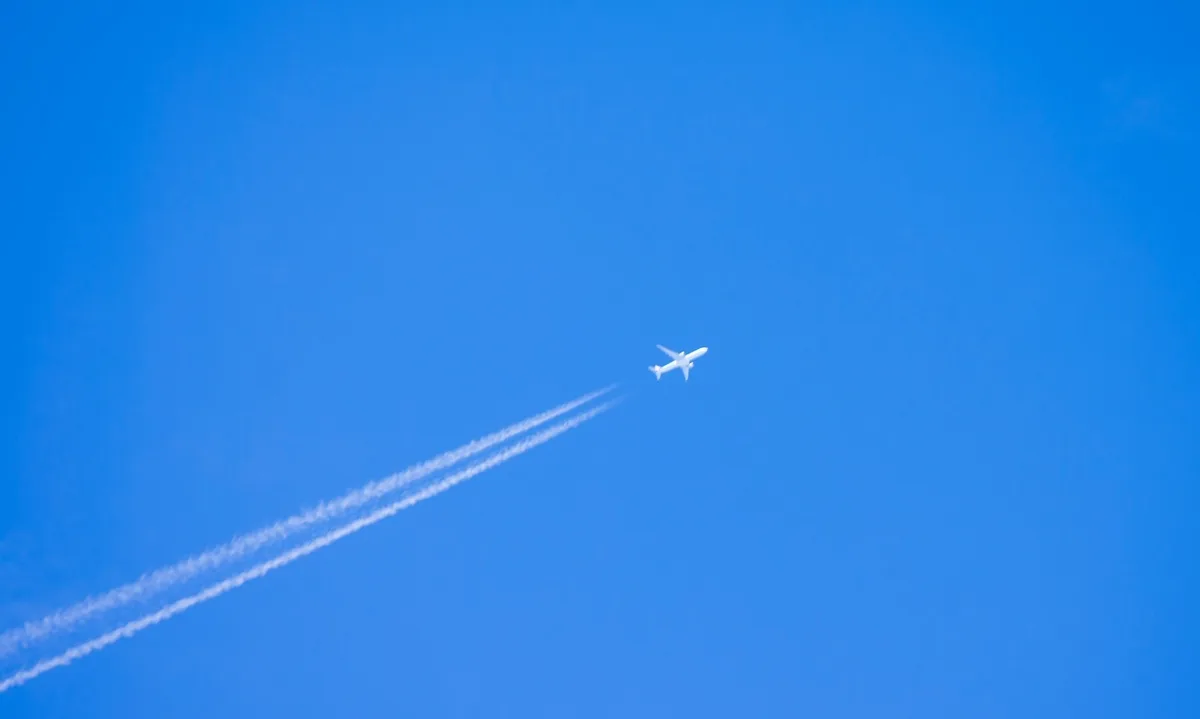
You may not know this, but aircraft contrails are not just harmless white streaks in the sky; they can significantly impact our climate. Now, American Airlines and Google have devised an intelligent way to minimize these contrails on transatlantic flights.
In recent years, climate discussions in the aviation industry have often focused on sustainable aviation fuel, new aircraft, and efforts to reduce emissions. However, one of the primary contributors to climate warming that the aviation sector rarely addresses is, in fact, contrails.
The Impact of Aircraft Contrails
Recent studies indicate that the effects of contrails and non-CO2 aviation impacts are far greater than previously thought. Contrails can create cirrus clouds that trap heat and contribute to the warming effects of aviation. A 2026 study predicts that contrails could cause more warming than CO2 emissions from the aviation sector by 2050 if no changes are made.
New Technological Solutions
The solution proposed by Google and American Airlines involves using artificial intelligence (AI) to predict contrail formation, integrating this directly into American's flight planning software. In a trial involving 2,400 transatlantic flights, implementing contrail-avoidance plans resulted in a 62% reduction in contrail formation compared to a control group.
Many might assume this technology is complex or cutting-edge, but it’s essentially a predictive tool for flight planning. The system aims to answer a simple question before takeoff: Along the flight path, where are the areas with cold and humid air likely to produce contrails?
How It Works
The system utilizes data from satellites, weather reports, and flight routes to create predictive contrail maps. These predictions are compared with open-source contrail models and provided to pilots and planning staff, enabling them to avoid altitudes prone to contrail formation.
✈️ Tìm chuyến bay giá tốt
Đặt vé ngay với giá ưu đãi từ các hãng hàng không
Research shows that even slight changes in cruising altitude can significantly reduce contrails. This approach is similar to how the aviation industry has optimized flight plans to avoid storms or turbulent weather.
Why Small Changes Matter
Contrail formation is not uniform. Studies indicate that less than 10% of flights are responsible for 80% of the contrail impact on climate. This suggests that minor adjustments in flight paths can lead to substantial results.
The initial 70-flight experiment between Google and American demonstrated that avoiding contrails reduced contrail formation by 54%, even though the fuel consumption for these flights increased by about 2%. However, new research with 2,400 flights showed that the overall fuel impact across the fleet could be as low as 0.3%.
Industry Motivation
In 2022, airlines such as Alaska Airlines, American Airlines, and Virgin Atlantic formed a Contrail Impact Group to research and implement solutions for contrail reduction. The aviation industry has considerable experience optimizing flight routes for wind, fuel consumption, and traffic flow, making it feasible to incorporate contrail-prone areas into flight plans.
Challenges Ahead
Nonetheless, challenges remain. Air traffic control procedures must ensure safe distances between aircraft. Pilots and planning staff need to keep processes straightforward and not overload them with additional complexities. Current flight planning software suggests that this approach is more feasible than developing sustainable fuels, which are costly and do not yield consistent long-term results.
Why This Issue Gets Less Attention
Part of the reason contrails don’t receive as much attention is due to their complex nature. Reducing CO2 emissions is more straightforward for the public to understand: burning fuel, emitting gases, warming the planet. However, the impact of contrails is harder to visualize. Some contrails dissipate quickly, while others trap heat. The science behind this is more complicated, making communication about it challenging.
Nevertheless, the reality is that non-CO2 impacts of aviation are substantial, and avoiding contrails is one of the few issues that can be addressed in the short term. The aviation sector has spent considerable time discussing long-term solutions, but this highlights effective methods that can work with existing aircraft and systems.
Conclusion
Ultimately, the collaboration between American Airlines and Google has opened a new avenue for reducing the impact of contrails on climate without significantly affecting passenger costs or schedules. This serves as a prime example of how technology can help improve and protect the environment while maintaining regular aviation operations.
HereWeGo
HereWeGo is a leading online flight booking platform in Vietnam, providing accurate and up-to-date travel information. We are committed to delivering wonderful travel experiences with the best prices on the market.